.avif)
A festival means three to five days of non-stop activity, dozens of temporary checkout points, areas where 4G is overloaded or crashes, rain, dust, and an audience that wants to pay contactless in two seconds—whether at the bar or the food truck. Buying a fleet of payment terminals for this makes no sense: the payback period doesn’t work out, technology evolves, and you end up storing equipment for eleven months a year. rental of payment terminals for festivals has become the go-to solution—but you still need to know exactly what you’re renting and under what terms.
Here are the factors that really matter for a festival TPE in France, how to size your fleet, and the pitfalls to watch out for.
Why Rent Instead of Buying for a Festival
The math is simple. A festival uses its payment terminal fleet for just a few days a year. Purchasing a payment terminal involves paying the full cost of the equipment, plus setup fees, plus the long-term commitment to a payment service provider. When you consider the ratio of days of use to total cost, purchasing is rarely justified.
Leasing offers three key advantages. You pay for usage, not ownership. You benefit from the latest hardware with each release (Android touchscreen POS terminals in 2026, perhaps something else in 2028). And you transfer maintenance, customer service, and security standard updates (PSD2, 3D Secure v2) to the lessor—who handles them on your behalf.
One last point that’s often overlooked: renting gives you flexibility from one event to the next. Has your attendance gone from 8,000 to 15,000 visitors? You can double your fleet without having to sell off equipment you bought the previous year.
The technical criteria that really matter
4G connectivity with fallback mode
This is the number one criterion. A festival brings thousands of people together in a confined area, which automatically overloads mobile networks. The POS terminal’s dedicated 4G connection isn’t always enough. Look for a device capable of switching between 4G, local Wi-Fi, and, most importantly, store-and-forward mode: the transaction is stored locally and sent as soon as network connectivity is restored.
Without this feature, you'll miss out on payments during every peak period—which is exactly when you need them most.
Battery life
A bar station operates for 8 to 12 hours straight. The POS terminal must last for the duration of a full-day event without recharging, or come with spare batteries. Check the battery life under real-world conditions, not just the spec sheet: a terminal advertised as having 12 hours of standby time often lasts only 6 to 7 hours under heavy use with constant card scanning and 4G enabled.
Durability
A festival-grade POS terminal is exposed to rain, dust, bumps, and sometimes beer. Look for models with an IP rating for water resistance, a reinforced casing, and a touchscreen that works even with wet hands. A standard office POS terminal set up at a festival will be lost within two days.
Transaction speed
At a bar processing 200 transactions per hour, every second counts. The POS terminal must read contactless payments in less than a second, validate 3D Secure when required without holding up the line, and print or send the receipt without any downtime. Ask to see the transaction times during a demo, or rent a terminal for a trial run first.
Apple Pay, Google Pay, and native contactless payment
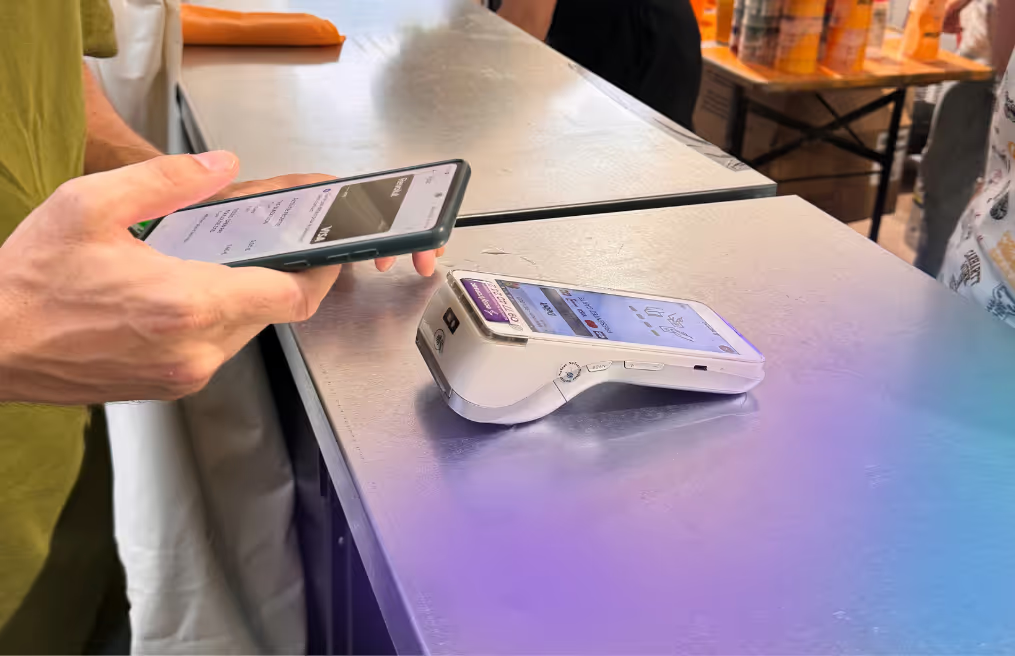
Among festival-goers (who are often young, urban, and mobile-first), a significant portion of payments are made via smartphone wallets. If your payment terminals don’t natively support Apple Pay and Google Pay, you’re missing out on a seamless experience. Contactless credit card payments have become a necessity, not an option.
The unified back office
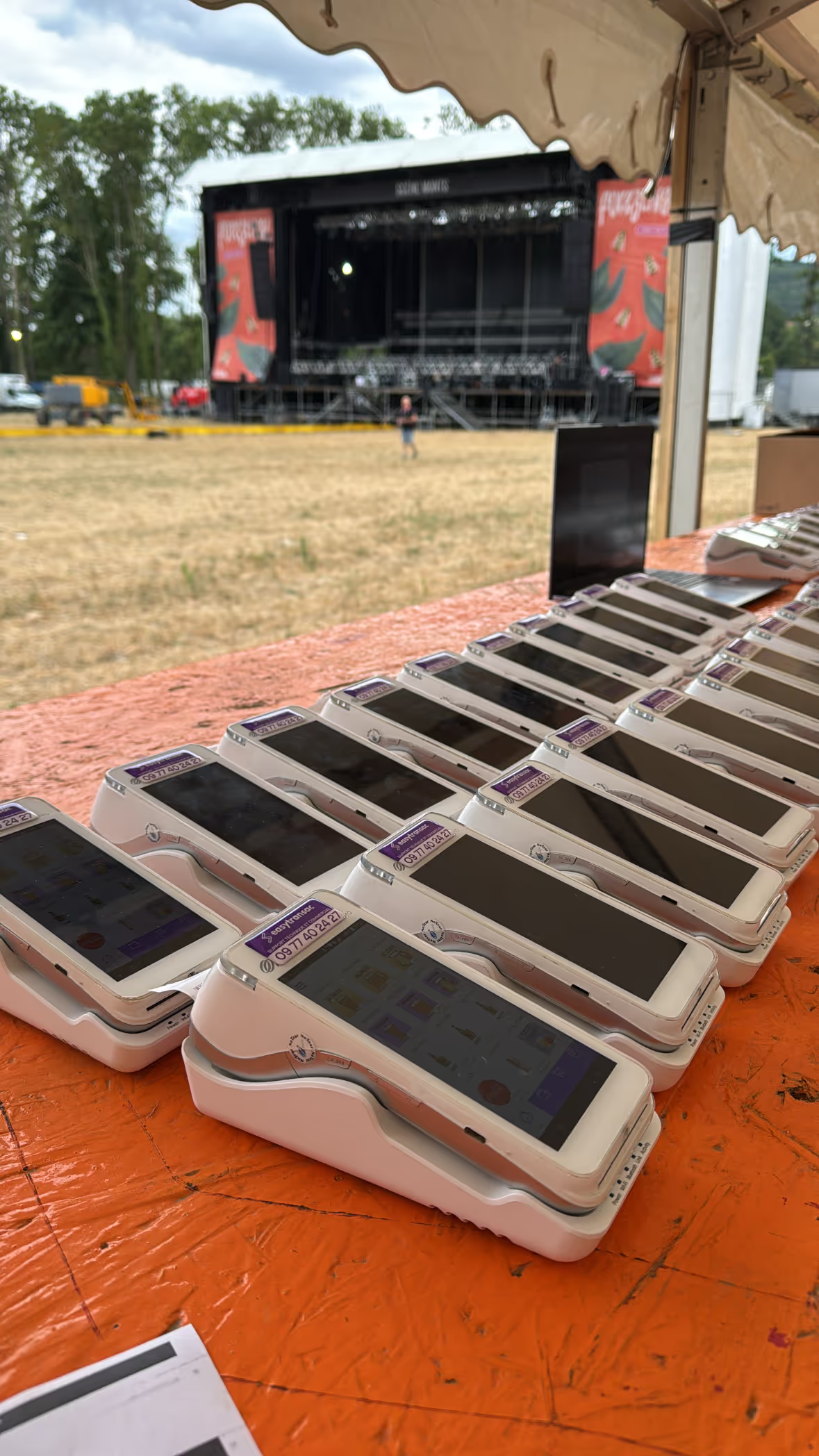
You’ll be managing 30, 80, or 200 terminals. If each terminal reports its transactions separately, your bank reconciliation will become a nightmare. Insist on a single back-office system that consolidates all transactions by terminal, by location, and by time slot.
How many terminals should we rent?
The rule of thumb: one POS terminal per active checkout lane, plus a 10–15% buffer for downtime. In a bar with two parallel lines, you’ll need two active POS terminals, not just one.
A few points of reference to provide context:
- Petit festival (< 5 000 visiteurs/jour) : 5 à 15 TPE selon le nombre de bars et food trucks.
- Medium-sized festival (5,000–20,000 visitors per day): 20 to 50 small businesses.
- Large festival (more than 20,000 visitors per day): 50 to 150 small businesses.
These ranges depend primarily on the "transactions per visitor" ratio and your payment mix (if you operate primarily on a cashless basis, you’ll have fewer payment terminals—see below).
What file formats are required for each position?
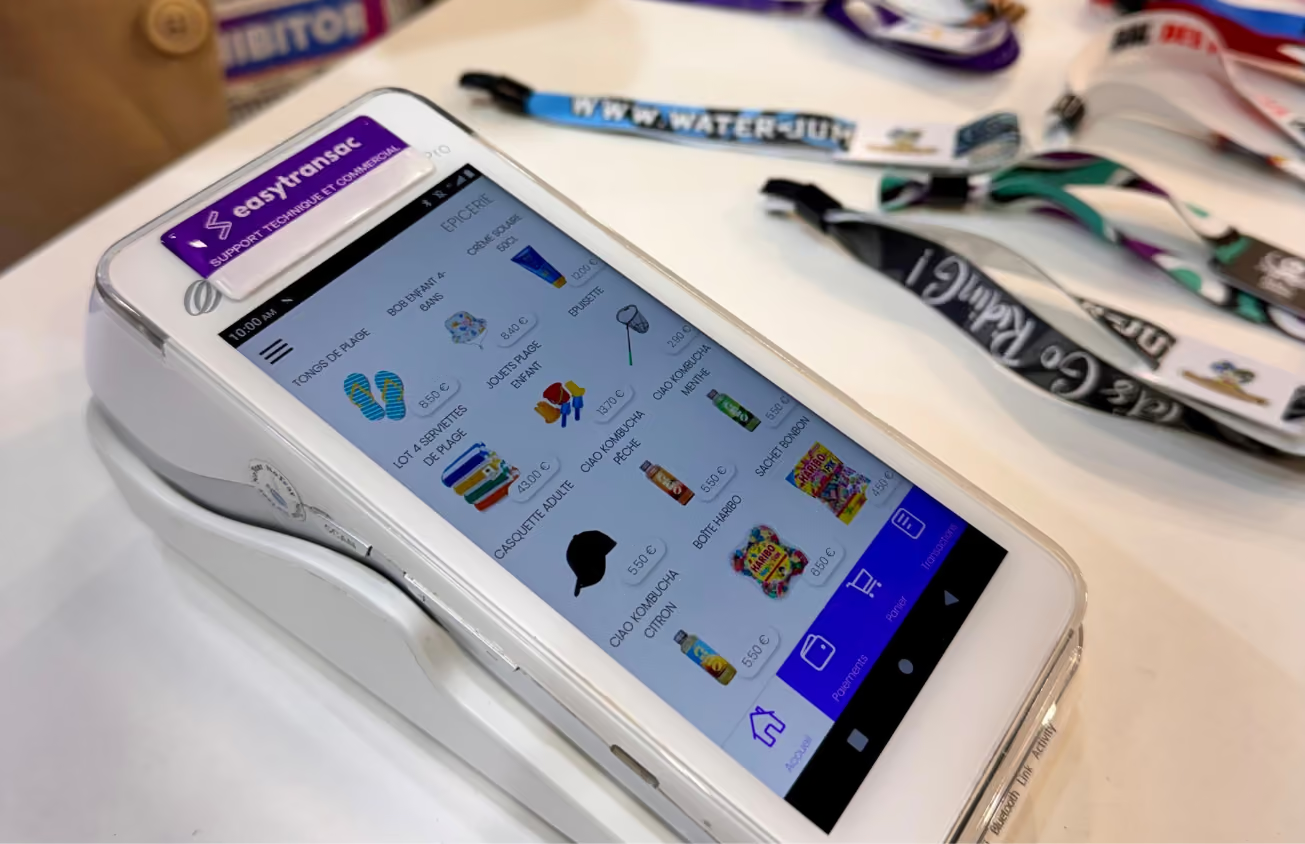
Standalone touchscreen Android POS system for main bars, stationary food trucks, and merchandise stores. This is the standard model: widescreen display, built-in POS app, receipt printing, 4G + Wi-Fi.
Compact POS system for mobile food trucks, street vendors, and secondary locations. Smaller, lighter, with a shorter battery life but designed for intermittent use.
SoftPOS on Android smartphones for temporary sales stations (selling water while waiting in line, collecting deposits for lost items, or setting up emergency sales points in just a few minutes). No equipment to rent—just an app on your team’s phones.
Payment link for pre-event activities: pre-sale of prepaid cashless wristbands, B2B sales to partners, last-minute VIP sales. No payment terminal required.
Combining POS terminals and cashless payments: the two aren't mutually exclusive
Cashless payment systems for events (rechargeable NFC wristbands) remain the most seamless solution for high-density festivals. However, they do not replace traditional point-of-sale terminals.
Not all visitors top up their wristbands—whether out of mistrust, laziness, or because they arrive at the last minute. These visitors pay directly by card. Without a card reader to complement your cashless system, you’ll lose out on their spending.
The model that works: cashless payments are the norm for regulars and those who top up online before arriving, with a card reader at every bar as a backup for in-person payments. At some festivals, this combination caters to both groups without inconveniencing anyone.
Cashless by Easytransac: POS terminal rentals tailored for festivals
Easytransac offers a point-of-sale terminal rental solution designed for seasonal events: 4G Android touchscreen terminals with store-and-forward mode, a unified back-office system for the entire fleet, support available during the event, and pricing based on the actual duration of your festival (not on an annual contract).
The solution integrates natively with a cashless event payment system and a pre-sale payment link—which is useful if you want to manage pre-event, on-site, and post-event operations from the same back-office.

Conclusion: Rent smart, don't just rent
The right POS system rental for a festival isn’t necessarily the cheapest per unit. It’s the one that provides you with the right equipment, in the right quantity, with connectivity and durability suited to the venue, and a contract with no hidden fees or surprises regarding support. At an event where every minute of downtime costs lost sales, the difference between a decent rental company and an excellent one is directly reflected in revenue.
Are you planning a campaign this season and want a detailed overview of your POS terminal fleet? Request an Easytransac demo: we’ll provide a quote based on your expected transaction volume, number of retail locations, and business model.