Do you want to set up a click-and-collect solution to eliminate lines at your festival, food truck, or stadium? Find out how Pikeat makes it easy in just a few hours.
Why implement a click-and-collect solution today?
Waiting in line is expensive. Not just in terms of patience—but in euros, too.

In the event industry, food trucks, and cultural venues, every minute of waiting means a lost order, a frustrated customer, and a lower average basket size. Studies are unanimous: if the wait exceeds 5 minutes, more than 40% of consumers abandon their purchase.
The click & collect solution directly addresses this problem. Customers order and pay from their smartphones, without waiting in line, without handling cash, and without waiting for a cashier to become available. You process more transactions, faster, with less friction.
That leaves the real question: How do you actually set up a click-and-collect solution? What are the prerequisites, the steps involved, and the mistakes to avoid?
What a good click-and-collect solution should include
Before choosing a tool, it’s important to understand what “click & collect” actually entails in the context of events or mobile food service. An effective solution must manage three processes simultaneously:
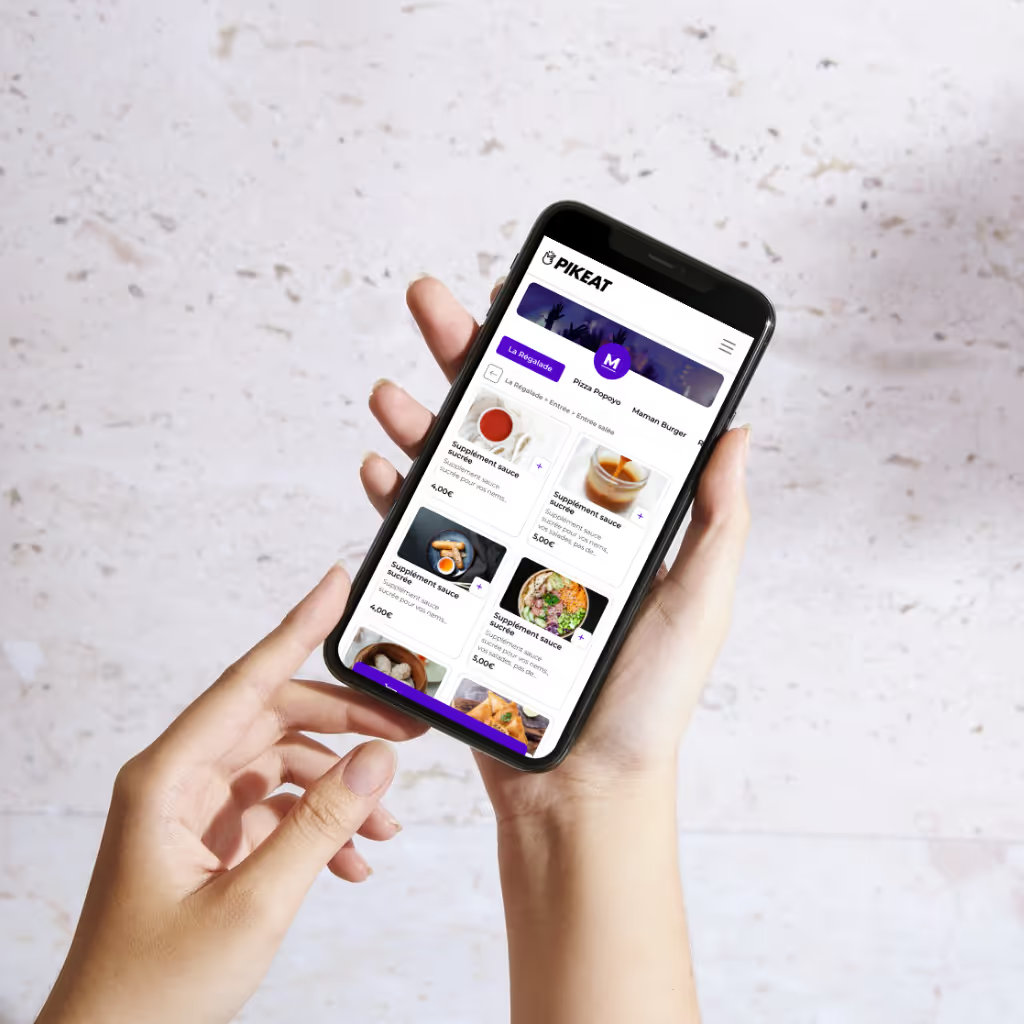
The customer experience: place an order on your own, pay securely, and get notified when your order is ready. No app to download, no account to create. Just a QR code and a smartphone—that’s all.
The operator workflow: receive orders in real time, manage inventory, pick items in the correct order, and prevent double billing. All from a simple interface accessible on a tablet or smartphone.
Cash flow: securely accept payments, automatically reconcile sales, and generate reports at the end of the day or event. No cash register errors, no need to handle change.
5 Steps to Setting Up Your Click-and-Collect Solution
Step 1 — Define your context and constraints
Whether you're a festival organizer, a food truck operator, or a stadium concession stand manager, your needs are different.
Ask yourself these questions: How many points of sale do you have? How often do customers need to renew their cards? Do you have Wi-Fi on-site, or do you need a solution that works over 4G? How many simultaneous orders do you expect during peak hours?
These answers will help determine which solution is right for you.
Step 2 — Choose a frictionless solution for the customer
The main obstacle to click-and-collect is customer adoption. If the ordering process takes more than two minutes or requires customers to create an account, you’ll lose half of your potential customers before they even get to the checkout.
Non-negotiable criteria:
- Instant access via QR code, no app download required (web app)
- Mobile-first interface
- Built-in secure payment (credit card, Apple Pay, Google Pay)
- Instant confirmation via notification or text message
Step 3 — Set up your online catalog
Once you’ve chosen a solution, it’s time to put it into practice. Create your menu or product catalog in the solution’s back office. Photos, descriptions, prices, options, allergens if necessary—everything customers need to place an order on their own.
Implement real-time stock-out management: there’s nothing more frustrating for a customer than ordering a product that’s out of stock.
Step 4 — Deploy your QR codes in the field
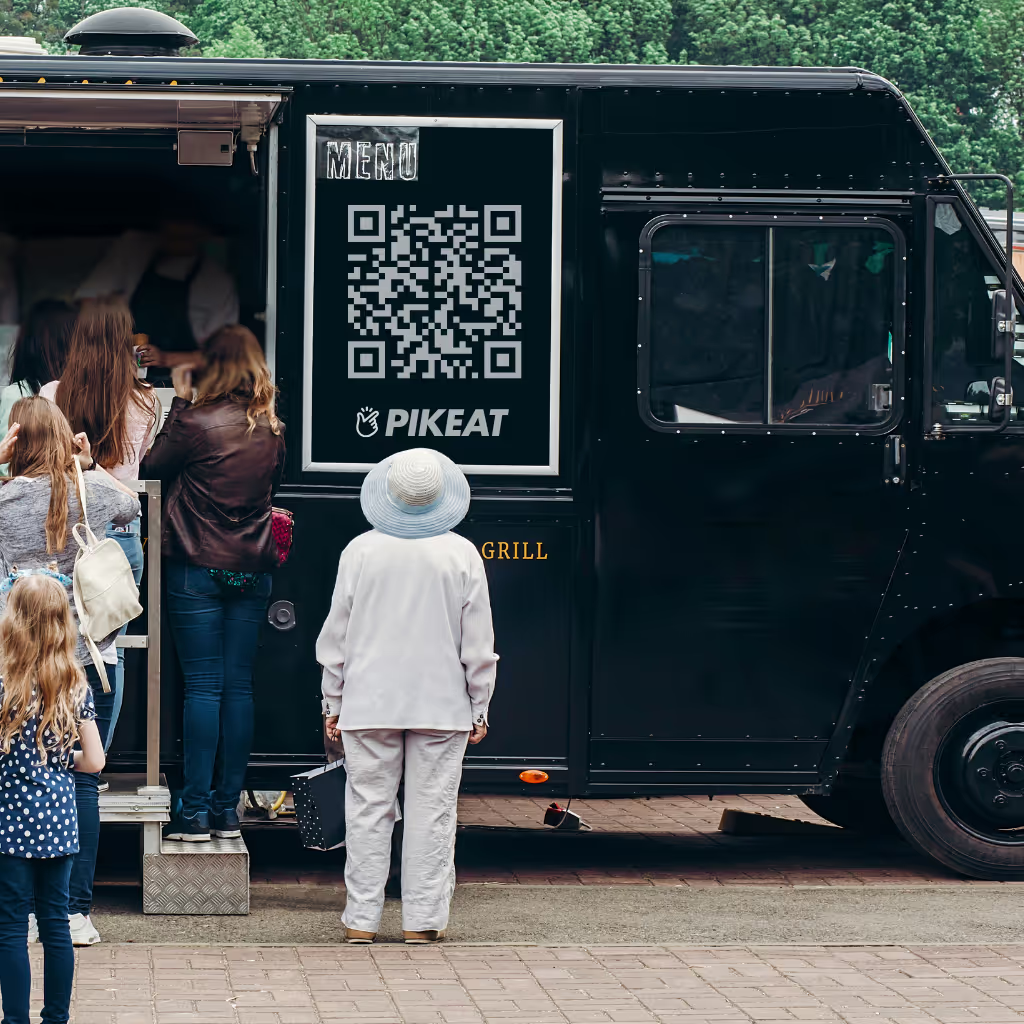
The QR code serves as the entry point to the entire experience. It is strategically placed on tables, at booth entrances, on promotional materials, on event wristbands, and on display screens.
The more visible and easy-to-scan the QR code is, the higher the adoption rate will be. Some solutions allow you to generate specific QR codes by area or order type—this is a real plus for large multi-booth events.
Step 5 — Train your teams and launch
Unlike a traditional checkout, a click-and-collect solution reduces the workload on staff. However, staff still need to be trained in handling incoming orders, prioritizing tasks, and managing special cases (refunds, unclaimed orders, etc.).
Be sure to conduct a test under real-world conditions before the big day, even if it's just a dry run with a few dummy orders.
Pikeat: EasyTransac’s click-and-collect solution designed for the events industry
It is precisely to address these challenges that EasyTransac developed Pikeat —a turnkey click-and-collect solution that can be deployed in just a few hours, without the need to purchase any special equipment.
Pikeat is designed for professionals who want to:
- Eliminate lines at their festival, stadium, trade show, or food truck
- Get paid faster without hiring additional staff
- Deliver a modern, seamless, and memorable payment experience
- Access real-time sales data to manage their business
What sets Pikeat apart:
Pikeat is built on the secure and proven payment infrastructure ofEasytransac, which serves more than 60,000 businesses in France. The solution is PCI-DSS compliant, compatible with all French and European banks, and customizable to match your brand or event.
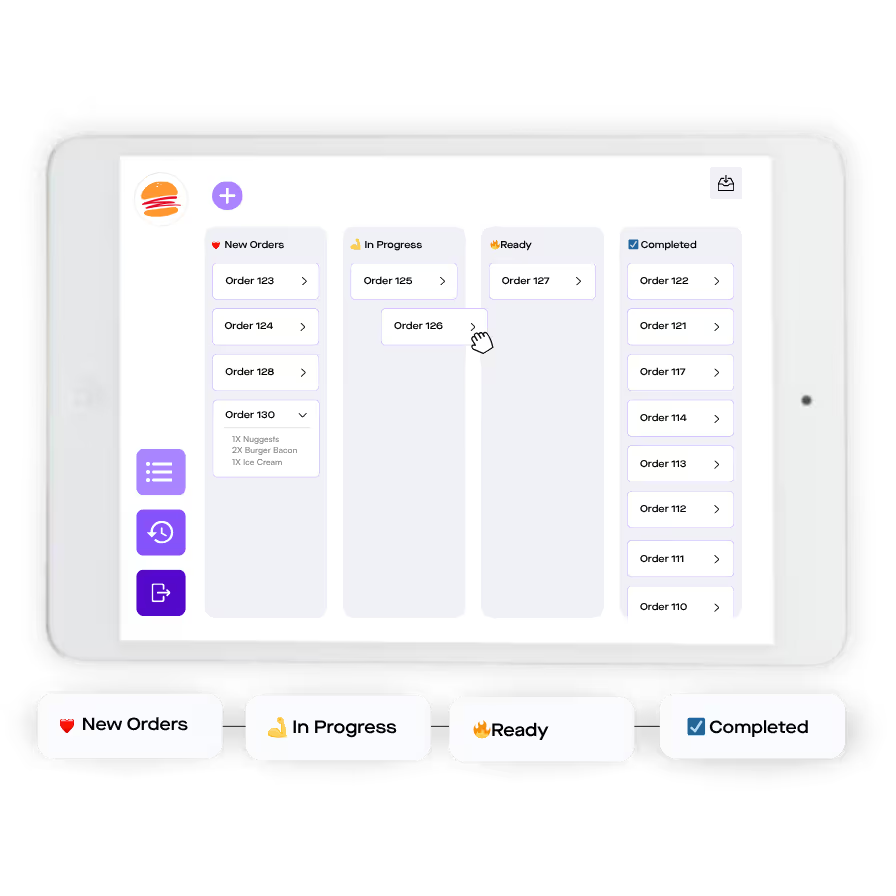
No client-side apps to download. A simple and intuitive back-office system for professionals. And a support team available to assist you before, during, and after the event.
For which industries is this suitable?
A click-and-collect solution like Pikeat is particularly well-suited for:
Events and Festivals — Manage dozens of points of sale simultaneously, eliminate lines at bars and restaurants, and increase your revenue per visitor.
Food trucks and mobile dining — Smooth out demand spikes with pickup time slots, reduce order errors, and accept payments without handling cash.
Stadiums and performance venues — Let spectators order from their seats during intermission and pick up their order in 30 seconds.
Amusement parks and cultural venues — Modernize shops and dining areas without overburdening existing staff.
Trade shows and exhibitions — Streamline on-site catering and provide both exhibitors and visitors with a seamless experience.
Click & Collect: Common Mistakes to Avoid
Choosing a solution that is too complex. A tool that requires extensive training or complex technical integration will be abandoned before it is even deployed. Prioritize a simple onboarding process.
Don't overlook connectivity. At an outdoor venue or in an older building, Wi-Fi can be unreliable. Make sure your solution works on 4G or has an offline mode for processing payments.
Don't overlook signage. A QR code that's poorly placed or too small is a QR code that goes unused. Invest in visible signage and materials that are suited to your environment.
Underestimating peak demand. Test your setup before opening. A click-and-collect solution must be able to handle dozens of simultaneous orders without slowing down.
Conclusion: Click & Collect is no longer just an option
In an age where consumers are accustomed to speed and convenience—whether they’re ordering a taxi, a pizza, or a concert ticket— sticking with a traditional checkout line with a long wait is a decision that comes at a high cost.
Implementing a click-and-collect solution like Pikeat means putting the customer experience at the heart of your business model, streamlining your operations, and boosting your revenue—without friction or complexity.
Are you interested in using Pikeat for your next event or retail location? Contact our team for a free demo and personalized support.