

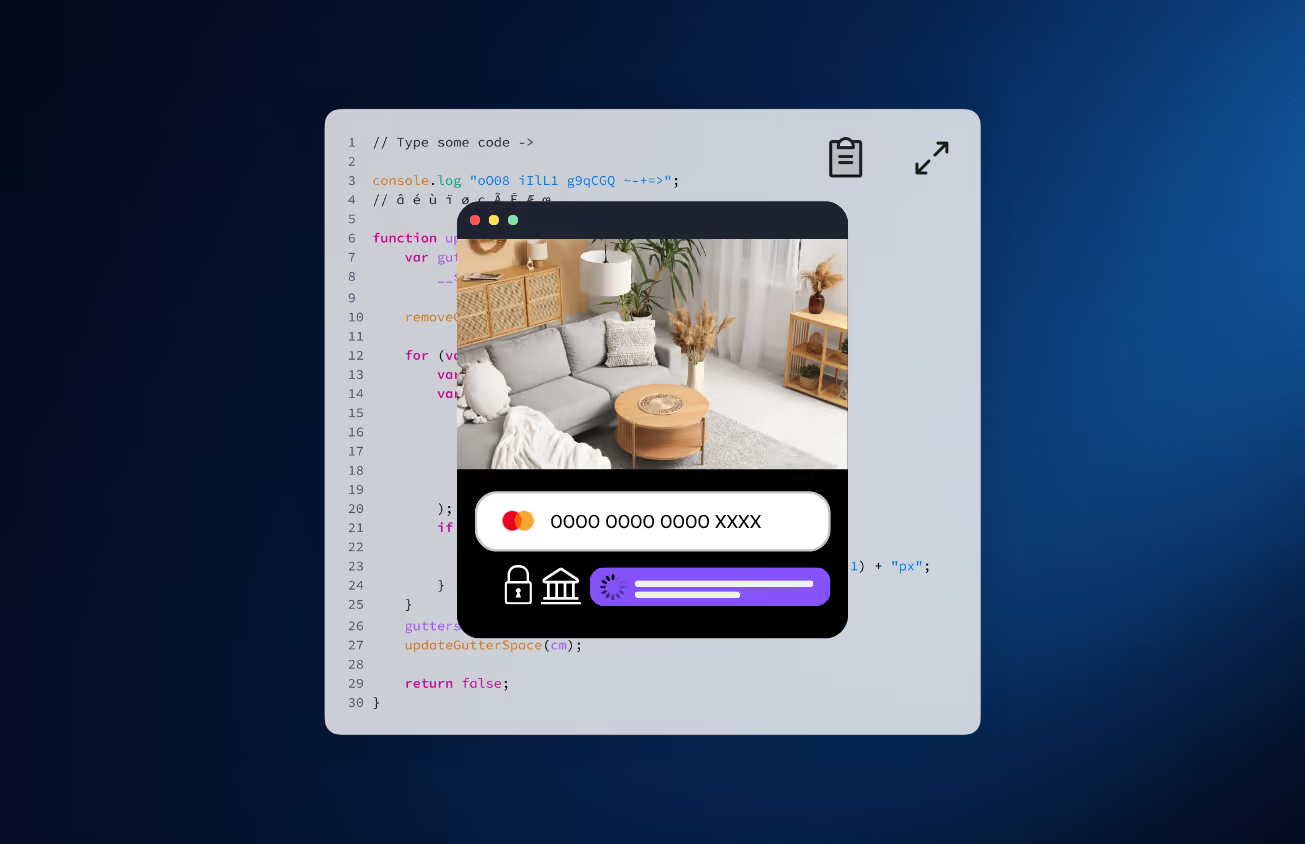
Process payments from your software: integrate or redirect?
If you’re a software publisher and want to let your customers collect payments from their own customers directly through your software (invoices, payment links, credit cards, direct debits, etc.), you have several options. The right choice depends mainly on one question: Do you want to integrate payment processing into your software, or simply redirect customers to a third-party provider?
This choice has tangible consequences: your users’ experience, your ability to generate revenue from transactions, your technical workload, and your reliance on a foreign provider. In this article, we review the options, their limitations, and the criteria for choosing a French white-label payment partner.
What is white-label payment?
White-label payment involves offering a payment processing solution under your own brand, while the infrastructure (transaction processing, compliance, and financial flows) is managed by a payment service provider.
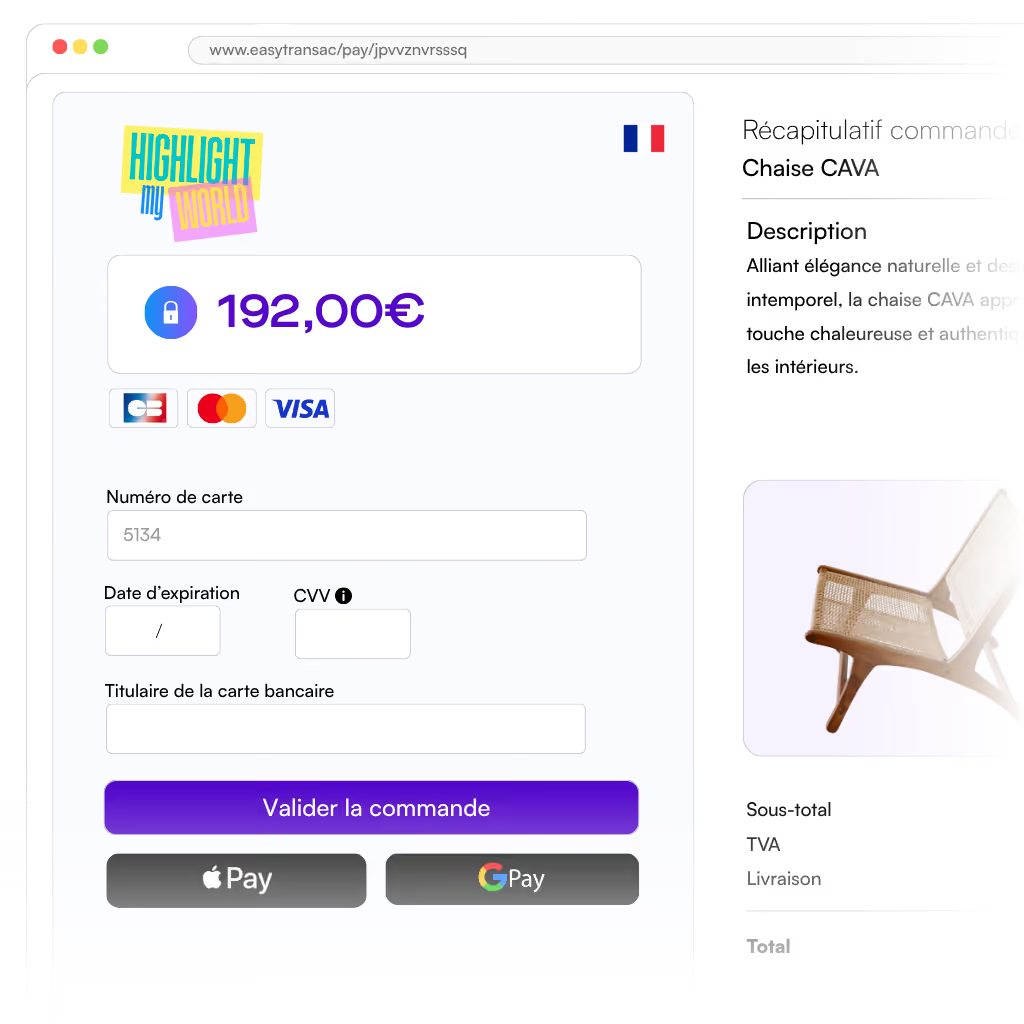
For your end customer, payment processing is built right into your software: they can create an invoice, send a payment link, or schedule a direct debit without leaving your interface. For you, the software provider, payment becomes a native feature of your product.
This is also referred to as integrated payment orembedded payments. The principle is the same: payment is no longer a separate tool—it’s built right into the software.
Integrate or redirect: that is the real question
Redirecting is faster to set up; integration adds more value to your software. Here's what actually changes.
Redirect is a good option if payments are only a minor part of your operations, or if you want to test the demand. Integration becomes relevant as soon as payment processing becomes central to your customers’ daily activities: billing, subscriptions, reservations, and member management.
4 Ways to Help Your Customers Make Payments
1. Redirecting to an external payment account
Your software displays a button or link that directs users to the service provider. Each customer opens their own account with the provider. It's simple, but you have no control over the user experience, the data, or the relationship.
2. Payment links generated from your software
Your software generates, via an API, a payment link or a QR code linked to an invoice or order. The end customer pays on a hosted page, and the status is then automatically updated. This is often the first step toward a truly integrated payment solution.
3. White-label API-integrated payment
Payment processing is built right into your interface: credit card forms, SEPA direct debits, recurring payments, and refunds. Your customers are onboarded as merchants through your software, and you manage everything via API. This is the most comprehensive option for a SaaS provider.
4. The platform or marketplace model
If your software connects sellers and buyers, or if you need to distribute a payment among multiple recipients, you need a platform-based solution: collecting funds, distributing them, and remitting payments to each seller, all within an appropriate regulatory framework.
Why use a French payment provider like Easytransac?
All the major international players offer platform solutions. But for a publisher selling in France, a French partner offers concrete advantages:
- A contact who speaks your language: support in French, understanding of local practices (billing, SEPA direct debits, the nonprofit sector, local governments, etc.).
- Personalized support: a dedicated point of contact for your customers' onboarding and integration, rather than self-service documentation and a support ticket.
- Negotiable pricing: terms tailored to your volume and business model, with the option to set your own margin.
- Funds and Data in Europe: A European Regulatory Framework to Help You Meet Your Clients’ GDPR Requirements.
- A sales pitch: “French solution” reassures many merchants and government buyers.
Criteria for Choosing Your Partner
Before signing, check the following:
- Supported payment methods: credit cards, Apple Pay, and Google Pay; SEPA direct debit; bank transfer; installment payments; and in-person payments (via a point-of-sale terminal or smartphone) if your customers also accept payments in person.
- API and documentation quality: test environment, status webhooks, code examples.
- Merchant onboarding: Can your customers be created and verified (KYC) directly within your software, without having to go through an external process?
- Revenue Model: Can you set your own rates and earn a commission on transactions?
- Customization: payment pages, emails, and receipts branded with your logo.
- Reporting: Reconciliation of payments with invoices; accounting exports.
- Support and Assistance: Response Times, Dedicated Contact Person, Language.
- Pricing Transparency: per-transaction fees, flat fees, direct debit rejection fees, and refund costs.
Easytransac: The French Payment Partner for Software Publishers
Easytransac supports software and SaaS publishers who want to integrate payment processing into their product under their own brand.
- Omnichannel payment: online payment, payment links and QR codes, recurring payments, and in-person payments—all through a single integration.
- Documented API: technical documentation to help you integrate payment at your own pace.
- Dedicated support: a team based in France to handle integration, client onboarding, and follow-up.
- Customized pricing: terms tailored to your volume and business model, including IC++.
Want to see how this works for your software? Check out our page on SaaS and software publishers.
FAQ
What is a white-label payment solution?
It's a payment processing solution that you offer under your own brand, within your software, while payment processing is handled by a specialized service provider.
Do you need a license to offer payment options in your software?
No: When using an approved payment service provider, the provider is responsible for complying with the regulatory framework. However, your role and obligations depend on the specific arrangement chosen, which you should confirm with your partner.
What is the difference between redirection and integrated payment?
With payment redirection, your customer leaves your software to make or receive a payment through a third party. With integrated payment, everything happens within your interface, and the data is synced back to your software.
Can a software publisher make money from payments?
Yes. In a white-label model, the publisher can generally set its own rates and collect a share of the transaction fees, which generates recurring revenue in addition to subscription fees.
What payment methods should you offer your customers?
At a minimum, credit card and payment links. Add SEPA direct debit for subscriptions and recurring bills, and contactless payment if your customers serve the public.
In a nutshell
To enable your customers to accept payments through your software, the redirect process is fast but limited; a white-label integrated payment solution enhances the experience, boosts retention, and opens up a new revenue stream. The right partner supports your customers’ preferred payment methods, simplifies their onboarding, and guides you through the integration process.
Are you a software publisher looking to integrate payment functionality into your solution? Talk to our team to discuss your project.
