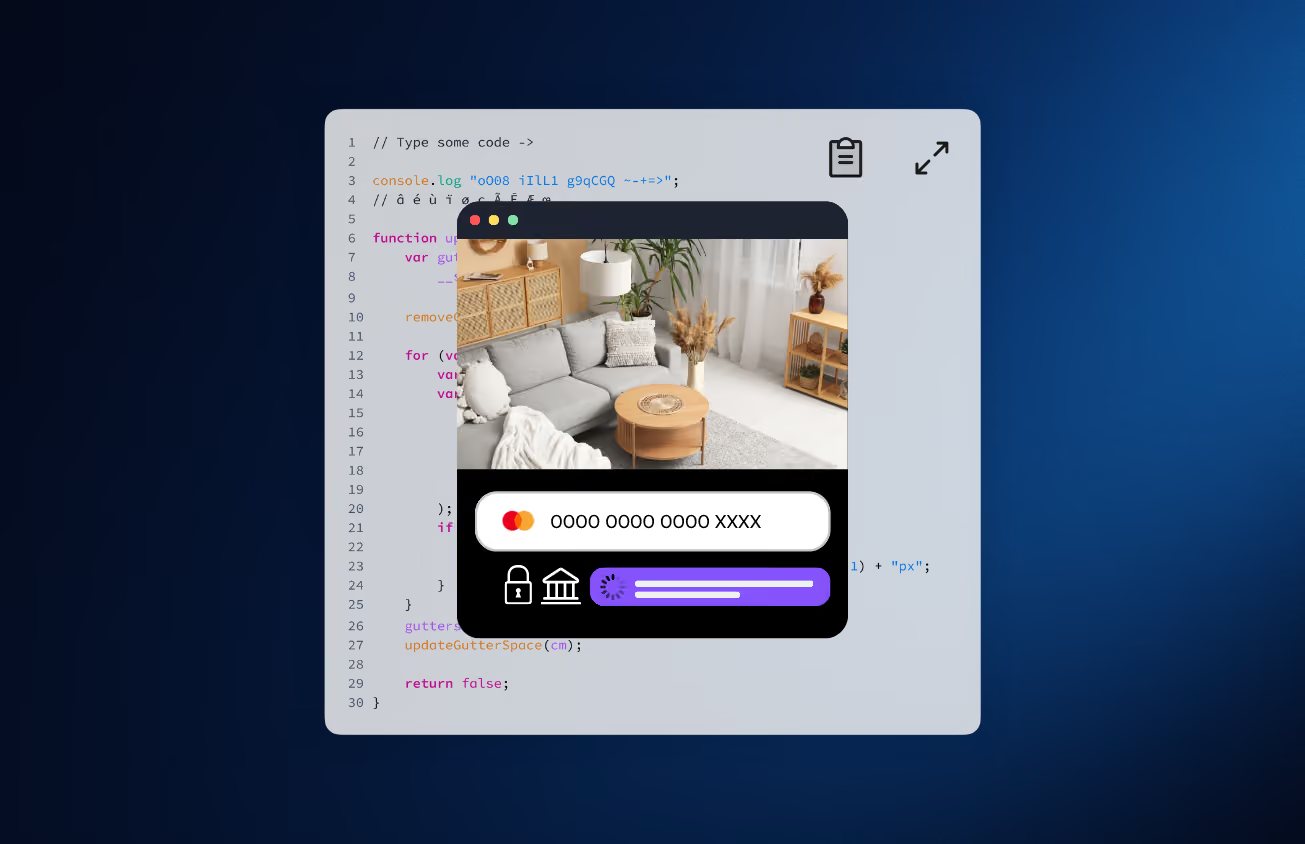
Payment has become a core product feature
Do you develop booking software, a CRM, a management tool, or a marketplace? Your customers no longer want to juggle between your platform and a separate payment provider. They want to accept payments right where they’re already working: within your software.
For a publisher, integrating payment changes three things. The user experience becomes seamless, with no redirects or duplicate data entry. Retention increases, because it’s harder to leave a platform that handles payments. And payment can become a new revenue stream.
But you still need to choose the right model. A SaaS company that bills for subscriptions, a software publisher that collects payments on behalf of its customers, and a marketplace that distributes funds to sellers do not have the same technical requirements or regulatory constraints. This guide will help you make sense of it all.
SaaS, vertical software provider, marketplace: three payment models
Before comparing service providers, figure out who collects what and on whose behalf.
Many platforms combine two business models: a subscription-based SaaS service that also offers payment processing to its users. In that case, it’s best to choose a provider that can handle both with a single integration.
Collection on Behalf of Third Parties: A Regulatory Overview
As soon as your platform receives money intended for someone else, you are acting as a third-party payment collector. In France and the European Union, this is a payment service regulated by the PSD2 Directive and the Monetary and Financial Code.
In practical terms, a marketplace that deposits funds into its own account before paying them out to sellers exposes itself to regulatory risk, unless it qualifies for a very strictly regulated exemption. You have two options:
- Obtaining your own license from the ACPR (as a payment institution or electronic money institution): a lengthy and costly process, suitable only for very large volumes.
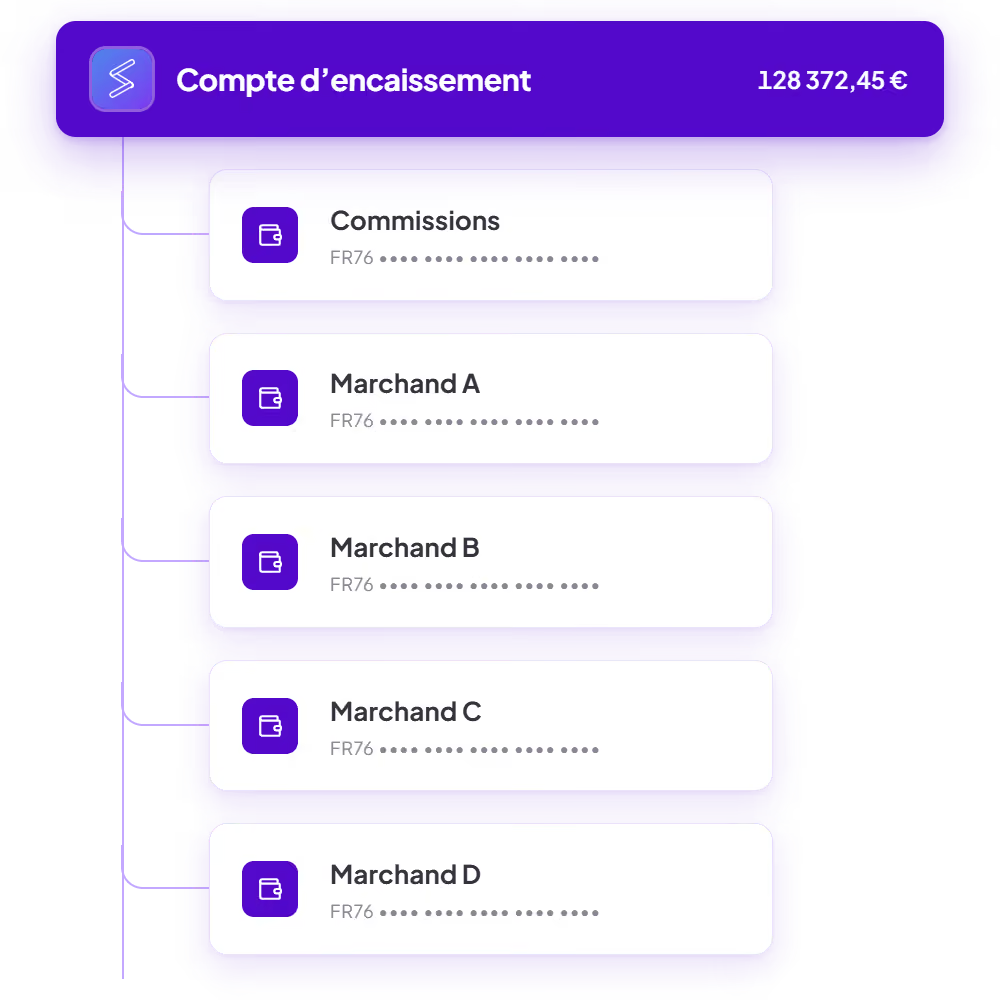
- Rely on a regulated partner that ensures compliance: funds are held in segregated accounts, sellers are identified (KYC), and distribution is automated.
For the vast majority of SaaS companies and marketplaces, the second option is the quickest to implement. You focus on your product, and your partner handles compliance.
>> Contact us about your project
Essential Features of a Payment API
A good payment API is judged by how quickly it can be integrated and by how much development work it saves you. Here's what your developers should check:
- Documented REST API : Integrate payment directly into your product flow, without redirecting to a third-party page.
- Webhooks: Real-time notifications for every event (payment, subscription, refund) to update your database without polling.
- Sandbox Environment: Comprehensive testing before going live.
- Recurring payments: creating, modifying, and canceling payment plans; refunds; and automated reminders in case of payment failure.
- One-Click Payment : a saved card for your repeat customers.
- Various payment methods: credit card, Apple Pay, Google Pay, payment link, SEPA direct debit, Open Banking transfer (Pay by Bank).
- White-label: The payment experience reflects your brand, not the service provider's.
- Tracking and reporting: transaction dashboard, statistics, anti-fraud scoring, data accessible via API from your CRM.
Open Banking deserves special attention for large B2B transactions: the payer authorizes the transfer in their banking app without having to enter card information.
Online and in-store: Think omnichannel
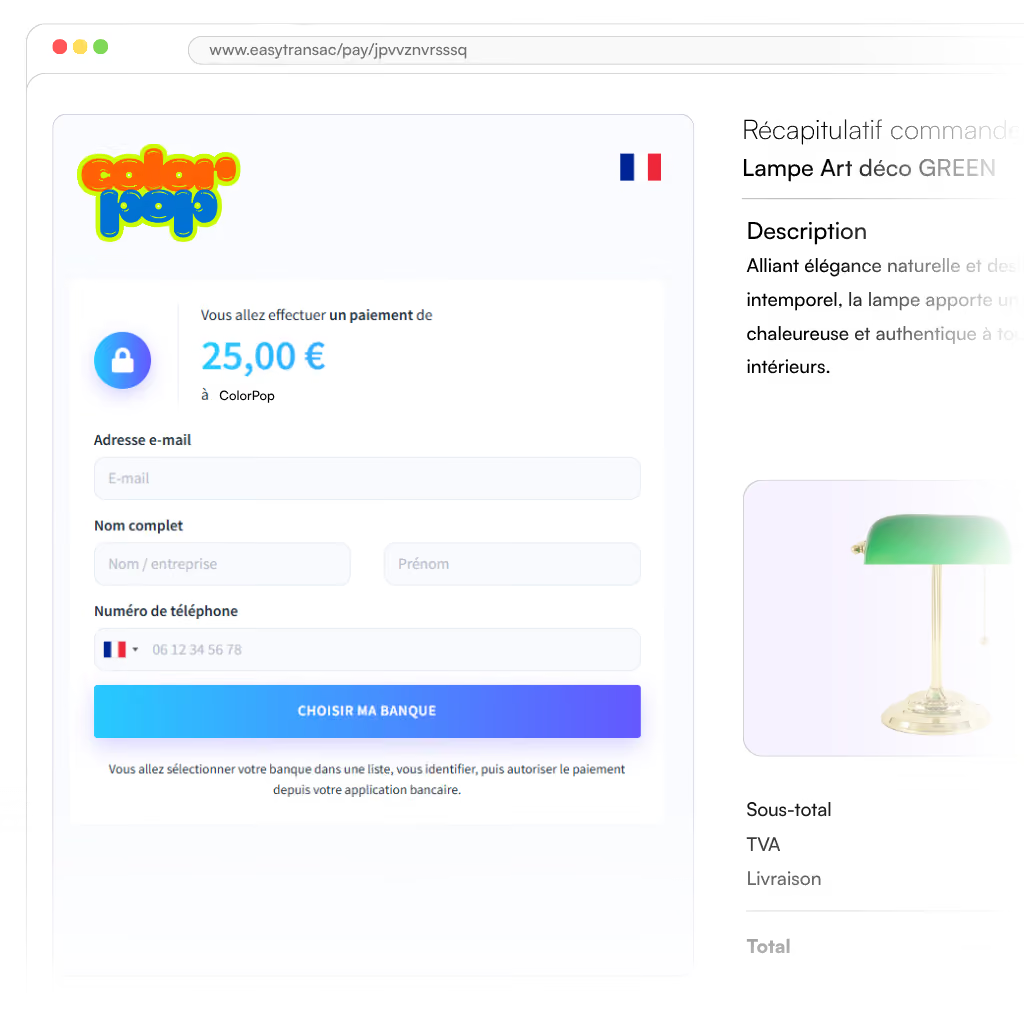
Many software solutions are designed for businesses that also accept in-person payments: sports clubs, campgrounds, retail stores, and recreational facilities. If your partner only handles online payments, your customers will need to add a second service provider for their point-of-sale system, which means two contracts and two sets of reports.
An omnichannel solution addresses both with a single integration:
- Online: credit card, Pay by Link, SEPA direct debit, Pay by Bank.
- In the field of physics: payment terminals with included software, SoftPOS for processing payments on smartphones, and NFC and contactless cashless payments.

The result: All of your customers' transactions are consolidated in one place—in your software.
>> Contact us about your project
How to Choose a Payment Provider: The Checklist
Before signing, ask each service provider these questions:
- Regulatory status: Is it licensed or affiliated with a regulated institution? Is it listed in the ACPR’s Regafi registry?
- Security: Is it PCI DSS-certified, and at what level?
- Third-party account: Does it manage the distribution of funds between your platform and your users?
- Merchant Onboarding: How Are Your Customers Registered and Verified (KYC) Through Your Software?
- Coverage: Online only, or also in stores?
- Pricing: Blended or IC++ model, fixed fees, transfer fees, potential margin for the publisher?
- Support: A French-speaking contact person who is available and familiar with your onboarding process?
- Documentation: Public API, Sandbox, code examples, CMS plugins?
>> Contact us about your project
Easytransac, the French payment solution for software publishers
Easytransac supports software, SaaS, and marketplace providers who want to integrate payment functionality into their platforms. A single integration covers the three models described above:
- Subscriptions and recurring billing: plan management, automatic invoices, payment reminders, refunds (learn more).
- White-label integrated payment: REST API, webhooks, Sandbox, one-click payment, no redirect.
- Third-Party Collection: Payments and transfers to multiple recipients, automatic allocation of funds, and built-in regulatory compliance.
- Omnichannel: online, small businesses, SoftPOS, and cashless payments—all with a single partner.
- CMS Plugins: WooCommerce, PrestaShop, OpenCart.
In terms of security, Easytransac is listed in the ACPR’s Regafi registry, is PCI DSS Level 1 Service Provider certified, and relies on Checkout.com and eZyness for transaction processing and management. More than 60,000 professionals already use its solutions.
Do you develop software or run a marketplace? Learn more about our Software & SaaS Developers offering, review the API documentation, or contact our team to discuss your integration.
FAQ
Which payment solution should you choose for a SaaS business? A solution like Easytransac that handles recurring payments (subscription plans, reminders, refunds), offers a REST API with webhooks and a sandbox, and accepts credit cards, SEPA, and Open Banking transfers. If your customers process payments themselves through your software, also check for white-label capabilities and third-party payment processing.
Can a marketplace process payments on behalf of its sellers? Yes, but processing payments on on behalf of third parties is a regulated payment service (PSD2). Unless exempt, the marketplace must hold an ACPR license or work through a regulated partner that manages the funds and ensures compliance.
What are embedded payments? It is the integration of payment functionality directly into business software: users can process payments from their own customers without leaving the software and without having to enter into a separate contract with a service provider.
Can we accept payments online and in-store with a single integration? Yes, with an omnichannel solution. Easytransac covers online payments (credit cards, payment links, SEPA, Pay by Bank) and in-person payments (POS terminals, SoftPOS, cashless).
Does Easytransac offer a payment API? Yes: a well-documented REST API, real-time webhooks, a sandbox environment, and plugins for WooCommerce, PrestaShop, and OpenCart. The documentation is available at easytransac.com/fr/documentation.