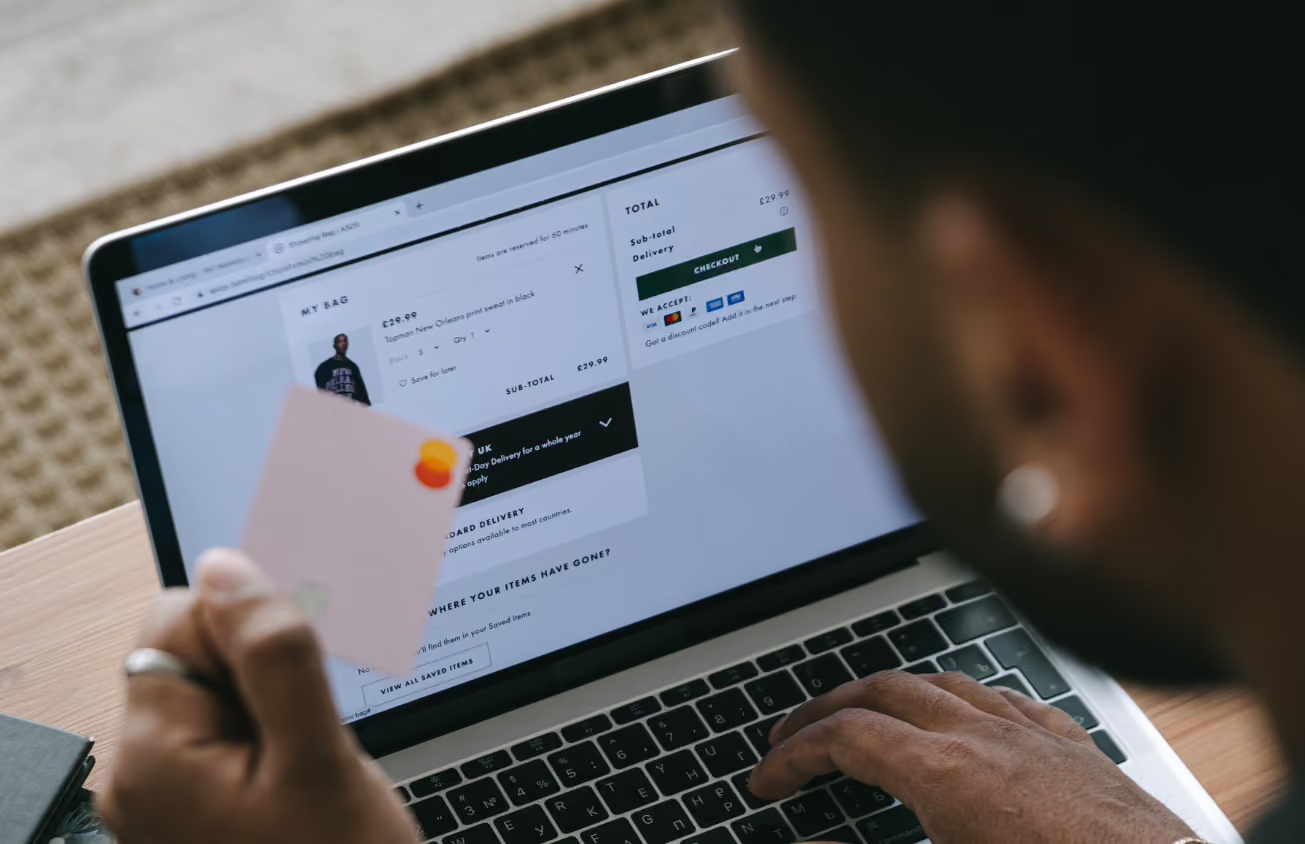
On average, 7 out of 10 visitors who add a product to their cart leave without making a purchase. This figure, which is regularly updated by the Baymard Institute, hovers around 70% across all industries. The good news is that this isn’t inevitable. A significant portion of these cart abandonments stems from identifiable and correctable friction points in the checkout process—particularly at the payment stage.
The Average Cart Abandonment Rate: Where Does Your Online Store Stand?
Before looking for solutions, you need to know whether your rate is actually a problem. Here are the benchmarks generally used in the industry:
The rate also varies by device: it is significantly higher on mobile than on desktop, and by industry (the food and beauty sectors have lower abandonment rates than fashion or electronics, where average order values are higher and the decision-making process takes longer).
The Real Causes of Cart Abandonment (and Their Actual Impact)
It is impossible to know with certainty why a specific visitor abandoned their shopping cart. However, numerous studies on the subject point to the same main causes:
7 Practical Strategies to Reduce Cart Abandonment
1. Display shipping costs as early as possible. This is the number one reason for cart abandonment. A progress bar that says something like “Just €12 more for free shipping,” displayed as soon as the customer adds items to the cart, significantly reduces the surprise at the end of the checkout process.
2. Enable guest checkout. Requiring users to create an account before paying remains one of the most avoidable friction points. The option to create an account can always be offered after the purchase.
3. Reduce the number of fields in the form. Every field you remove improves the completion rate. Address autofill and automatic payment method detection save valuable seconds.
4. Offer payment in installments. For high-average-cart-value orders, interest-free 3- or 4-installment plans have a measurable impact on the purchase decision by reducing the perceived cost.
5. Offer a variety of payment methods. Credit cards, digital wallets (Apple Pay, Google Pay), and instant bank transfers: the more the available options align with customers’ habits, the fewer disruptions there are at checkout—especially on mobile, where the friction of entering payment details is highest.
6. Position—or remove—the promo code field appropriately. This is an area that’s often mishandled: a prominent, empty “promo code” field prompts some visitors to leave the site to search for a code, with the risk that they may never return. Best practices: Hide the field behind a discreet link (“Do you have a code?”), or apply the discount automatically whenever possible. If you don’t have an active promo policy, it’s best to remove it from the checkout process entirely.
7. Follow up on abandoned carts. A sequence of 2 to 3 emails (a cart reminder, addressing objections, and then an incentive offer after 48–72 hours) can help recover some of the lost sales, in addition to retargeting ads to visitors who have shown a strong intent to purchase.
>> Start accepting payments with Easytransac
Why Choosing the Right Payment Solution Is a Game-Changer
Many of the factors listed above depend directly on the payment solution used: guest checkout, multiple payment methods, split payments, customization of the payment page, and a seamless 3D Secure experience. An e-merchant who switches providers to address these specific issues is directly tackling the most significant causes of cart abandonment, rather than making peripheral marketing adjustments.
For e-commerce merchants who already have a payment processing contract with another provider but want to improve the payment experience on their site—offering more payment methods and a secure checkout page with seamless 3D Secure— EasyWay directly addresses this need. It’s a payment gateway that integrates with the merchant’s existing banking agreement, without requiring them to switch providers or commit to a long-term contract. In other words: there’s no need to renegotiate the entire banking arrangement to resolve the friction points identified above—just integrate the right technical component into the checkout process.
>> See also : Payment Gateway: Boost Your Online Sales
Easytransac, your trusted partner
Easytransac offers French payment solutions; we support online stores and e-commerce businesses with:
but also:
▸ High-performance VSEs(fixed or mobileAndroid terminals )
▸ An integrated checkout system for unified management
▸ Cashless to digitize cash on site
▸ An access control, accreditation, and CRM system for events
📩 Are you an e-commerce merchant looking to start accepting payments?
Find out how Easytransac can automate and secure your payments! Contact us for a customized quote.