A festival is more than just a lineup.
It’s a holistic experience, made up of memorable moments, atmosphere… and operational details that, when taken together, make all the difference.
Among these details, there is one that all organizers are familiar with, but that many continue to put up with: the lines.
Waiting to get a drink, waiting to eat, sometimes waiting 30 minutes between concerts…
This isn’t trivial. In fact, it’s one of the main sources of frustration at an event.
A frustration that directly affects consumption
Contrary to what one might think, the wait is not just a temporary inconvenience.
It influences behavior.
A festival-goer who sees a line that’s too long will often make a simple choice: to give up.
To skip a drink. A dish. A second round.
This phenomenon is quiet, but widespread.
You don’t see it in the checkout lines… you see it in what never gets sold.
And the more people attend the event, the more significant this loss becomes.
A problem that is difficult to solve using conventional methods
In response to the expected demand, the most logical course of action is to increase resources: hire more staff, open more retail locations, and add more checkout lanes.
But this approach quickly reaches its limits.
Festivals operate in waves.
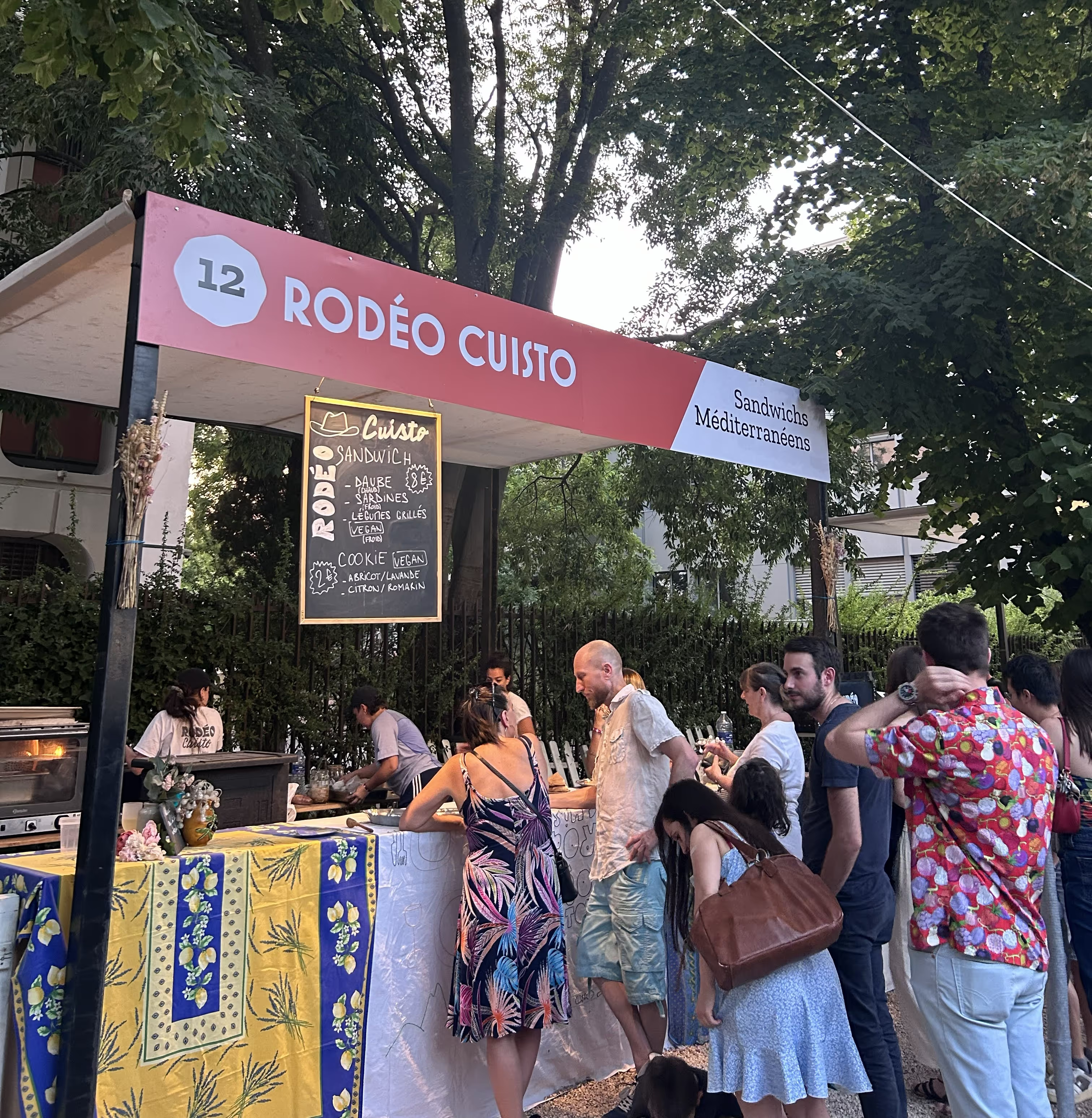
Between concerts, at certain times of day, or depending on the weather, hundreds of people flock to the same food stalls all at once.
Even if it is properly sized, an organization cannot handle these surges without causing bottlenecks.
The problem is therefore not just a matter of resources.
It is structural.
A customer journey that is ineffective by design
Even today, at most festivals, the process is the same:
The festival-goer stands in line, places an order, pays, and then waits for the order to be ready.
Everything happens in one place, at the same time.
This system puts pressure on retail outlets and inevitably leads to lines.
While certain parts of the process are sometimes optimized, the model itself is not called into question.
Eliminate the queue rather than optimize it
The real question isn’t “How can we reduce wait times?”
But rather: Why do they still exist?
This is precisely what Pikeat.
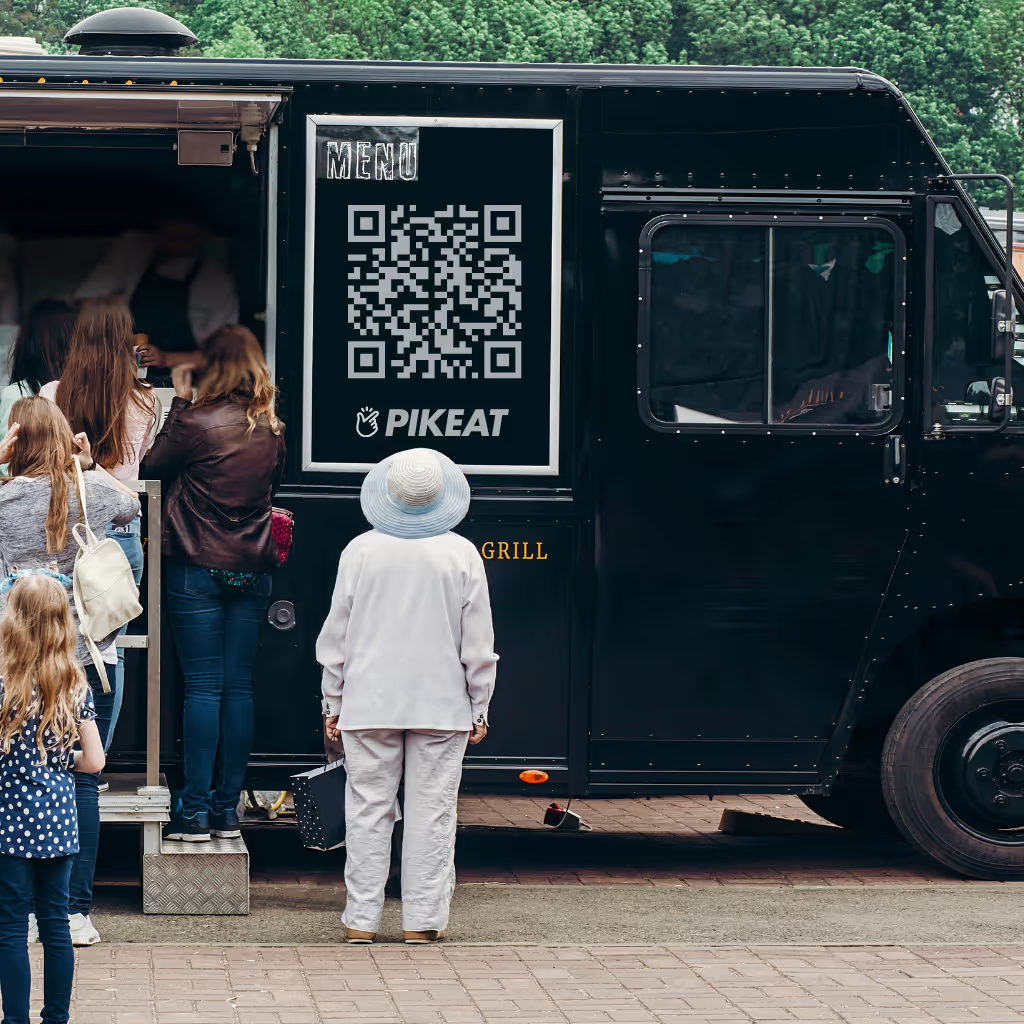
The idea is simple: to let festivalgoers order and pay directly from their smartphones, without having to go to a physical point of sale.
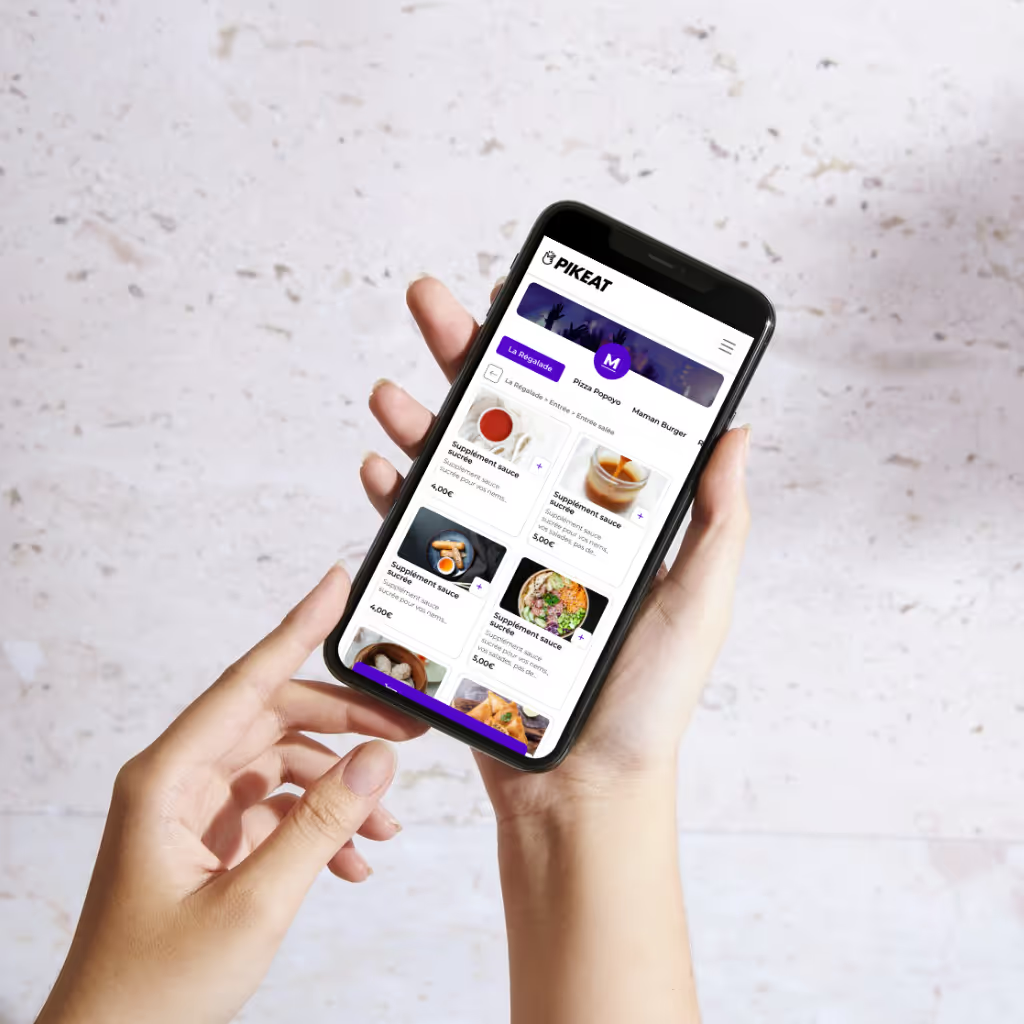
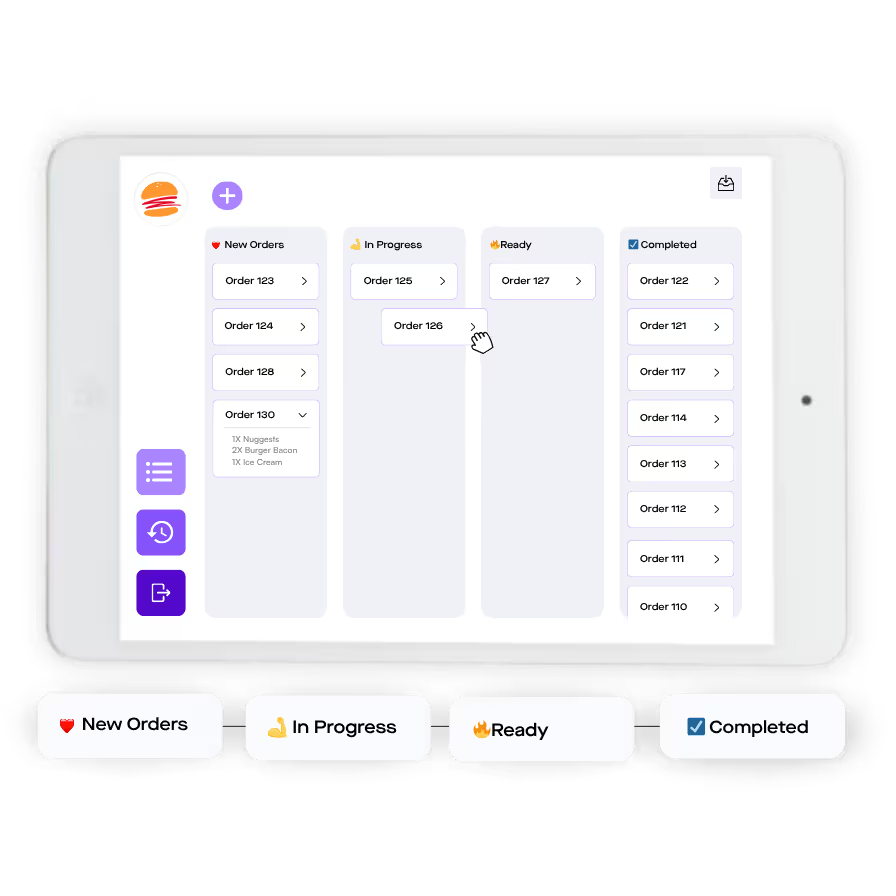
The order is sent to the counter or the kitchen, where it is prepared in advance, and the customer is notified by text message when it is ready. The customer simply comes to pick it up.
This seemingly simple change can lead to a significant increase in revenue.
A new approach to workflow
By processing orders at the point of sale, we immediately reduce congestion at the booths.
Orders come in steadily, rather than in sudden spikes.
Teams can work more smoothly, with less pressure and fewer errors.
For festival-goers, the experience is completely different.
No more having to choose between watching a concert and standing in line.
You can order remotely, at the right time, without any hassle.
The role of cashless payments… and their limitations
Cashless payments have already helped speed up the payment process at events.
This is a significant development, but only a partial one.
Because even though the payment process is faster, there’s still a wait before and after.
With a solution like Pikeat, we no longer just optimize the payment process.
We’re rethinking the entire customer journey.
A tangible impact, beyond comfort
Reducing—or even eliminating—waiting lines has immediate effects.
First, let’s talk about revenue.
Less friction means more orders, fewer abandoned carts, and often a higher average order value.
Next, let’s talk about the experience.
A seamless festival is one that’s better received, more enjoyable, and more memorable.
Finally, on the operational side.
Better-distributed workflows, less pressure on teams, and a more streamlined organization.
Conclusion
Long lines aren’t inevitable.
They are the result of a system that hasn’t kept pace with changing habits.
By redesigning the ordering process, it is now possible to eliminate this friction point without complicating the organization.
That’s exactly what Pikeat : turning a logistical challenge into a driver of experience and performance.
Who we are
With over 60,000 customers, Easytransac draws on a decade of expertise in a variety of payment solutions (mail-order, e-commerce, local retail, cashless, mobile payment processing, etc.). Pikeat is one of the company’s flagship products.
Easytransac is at the forefront of innovation in the ecosystem of electronic payments and hybrid and cashless solutions that meet the requirements of e-tailers, event professionals and SMEs.
Our platform simplifies transactions and enriches the user experience, thanks to an intuitive interface and real-time tracking, while ensuring security at every payment.
Have a project? Don't wait any longer! Contact our teams HERE
OR